Dear Friends,
No one knows the response of the first dad when his child was born, took their first steps, or uttered their first words. One can only imagine that pride and joy was on his countenance. From the beginning of time to present date, dads have been found loving, protecting and guiding their children and families through the stages of life. Every "ouch", teary eye and stumble was covered in his sturdy hands.
Our true thanks are not in a card, gift, or fancy dinner... but in the smiles and hugs we receive each day. So, on this weekend of traditional celebration, we offer you an extended salutation to last throughout your span of fatherhood.
Keep doing the good work you are doing and allow yourself the capacity to do even more.
May you have a very Happy Father's Day ... today and every day!
Brian Carter, Dads Inc. Director
Prevention: A Year-Round Effort
Monday, May 20, 2013
April was a busy month for Prevention Councils: pinwheel garden planting, conferences and other community events fill our already tight schedules. Child Abuse Prevention Month has become a time of hope—a time to remind people that everyone can do something to keep kids safe.It’s easy to feel tired and perhaps a little let down once it’s over. “All this effort,” we wonder, “is it really making any difference?”
The answer is a resounding “YES!” Every time we bring up the issue of prevention, there is an opportunity to make a difference in our communities. Each time we invite our neighbors, friends and family to get involved, we change the world. Anytime we extend ourselves to support parents, kids and families, we touch the future.
This is why our communities need to hear this message all year. April is a terrific opportunity, since most people know about Child Abuse Prevention Month. Sadly, though, our messages can be forgotten in the busy nature of everyday life. What do we have to say to our communities in May or September or February?
Advertising experts know that a message that is repeated is more likely to be remembered. While a Prevention Council may not have the big advertising budget of a large corporation, there are still many opportunities for sharing the message of prevention all year long. Some efforts don’t take a huge investment of time, but they keep the message in front of the public. Here are just a few examples:
• Write 12 articles on parenting issues and ask your local newspaper to publish one each month.
• Ask your local library to feature a selection of books on parenting and families. Place the books near the children’s area so parents and caregivers can read along with their children. Ask if you can provide a selection of brochures nearby.
• October is Domestic Violence Awareness Month. Consider partnering with your local domestic violence shelter or group to help people understand the connection between family violence and child abuse.
• Some Councils provide backpacks for children entering kindergarten. The backpacks may have school supplies and other goodies, along with information for parents.
• If your community has local restaurants that sell advertising space on their placemats, ask if they would donate space for an ad about prevention. People actually do read those ads while waiting for their chicken friend steak!
Want to find out if there is a Prevention Council in your county? Go to http://pcain.org/council_map.asp. If your county doesn’t have a Prevention Council yet, call Mary Armstrong-Smith to find out how easy it is to get started! Mary’s number is 317-775-6424.
Prevention Benefits EVERYONE!!
Monday, May 6, 2013
Child abuse prevention is about more than the prevention of the negative. It’s about the promotion of the positive. Merely keeping children from harm isn’t enough.
Let’s say you have a garden, full of flowers and vegetables. Do you work to simply keep your plants from harm by putting up barriers to keep out deer, rabbits and other pests? Or would you rather have a flourishing garden, full of strong, healthy plants? Achieving the second result calls for a different kind of work, one involving nurturing and strengthening the plants as opposed to just protecting them. Yes, it takes more work. But the result of that work becomes evident in the harvest.
As a nation, we can work together to strengthen our communities, making them places where all children have an equal opportunity for healthy growth and development. When we do this, we all benefit. Healthy, productive children grow into healthy, productive adults. They become workers and taxpayers, adding to our country’s economic strength.
And many become parents, raising the next generation. It is our responsibility as adults to steward the next generation. The future of our society depends on the opportunities we provide for kids today. If you’re not already involved in prevention, consider getting involved. Check to see if your county has a chartered Prevention Council. You can find out here. If your county doesn’t have a Council, contact us to find out how to start one. Call us at 317-775-6439!
Let’s say you have a garden, full of flowers and vegetables. Do you work to simply keep your plants from harm by putting up barriers to keep out deer, rabbits and other pests? Or would you rather have a flourishing garden, full of strong, healthy plants? Achieving the second result calls for a different kind of work, one involving nurturing and strengthening the plants as opposed to just protecting them. Yes, it takes more work. But the result of that work becomes evident in the harvest.
As a nation, we can work together to strengthen our communities, making them places where all children have an equal opportunity for healthy growth and development. When we do this, we all benefit. Healthy, productive children grow into healthy, productive adults. They become workers and taxpayers, adding to our country’s economic strength.
And many become parents, raising the next generation. It is our responsibility as adults to steward the next generation. The future of our society depends on the opportunities we provide for kids today. If you’re not already involved in prevention, consider getting involved. Check to see if your county has a chartered Prevention Council. You can find out here. If your county doesn’t have a Council, contact us to find out how to start one. Call us at 317-775-6439!
The “Clean Break?” Divorce and Children
Monday, April 22, 2013
Can a divorce ever be a “clean break” for children? This is still debatable. Some experts believe that children may wrestle with their parent’s divorce, even through adulthood. But there is new evidence which also points out children may feel “relieved” once their parents separate, if tensions have been high.
Most experts agree that two factors influence how well children cope with divorce:
The level of hostility and conflict between parents
And
Parental acceptance and adjustment to the break up
Use these nine tips to help minimize the negative effects on your kids:
1. Don’t confide in your children about adult concerns, like disagreements or finances.
2. Don’t “bad mouth” your ex.
3. Don’t use your kids as “spies” on the ex.
4. Minimize other changes in your lives. Try to keep regular schedules.
5. Remain the parent you have been, firm and consistent.
6. Encourage the kids to call the other parent, for school updates, etc.
7. Be open to other resources, websites, classes, for you and your children about divorce.
8. Do get help for your child if they’re having difficulties. A therapist can be a safe neutral person.
9. Same for you and your ex. If you can’t talk without hostility, seek a therapist.
With all parties present, let kids know how difficult this is for everyone. Allow children to express themselves with tears, anger, or other natural reactions. Remind the kids that the divorce WAS NOT THEIR FAULT, as kids tend to blame themselves. Encourage the kids to always know that you’re available to talk about anything, but especially about this. Those younger don’t need long sessions, but simple explanations. All children will treasure time together, especially if you take time to enjoy the things that THEY are interested. Remind them they are loved by both parents, no matter what.
Carol Pool, MSW (Taken from Isolina Ricci, PhD,
a family therapist and author of Mom’s House, Dad’s House.)
Most experts agree that two factors influence how well children cope with divorce:
The level of hostility and conflict between parents
And
Parental acceptance and adjustment to the break up
Use these nine tips to help minimize the negative effects on your kids:
1. Don’t confide in your children about adult concerns, like disagreements or finances.
2. Don’t “bad mouth” your ex.
3. Don’t use your kids as “spies” on the ex.
4. Minimize other changes in your lives. Try to keep regular schedules.
5. Remain the parent you have been, firm and consistent.
6. Encourage the kids to call the other parent, for school updates, etc.
7. Be open to other resources, websites, classes, for you and your children about divorce.
8. Do get help for your child if they’re having difficulties. A therapist can be a safe neutral person.
9. Same for you and your ex. If you can’t talk without hostility, seek a therapist.
With all parties present, let kids know how difficult this is for everyone. Allow children to express themselves with tears, anger, or other natural reactions. Remind the kids that the divorce WAS NOT THEIR FAULT, as kids tend to blame themselves. Encourage the kids to always know that you’re available to talk about anything, but especially about this. Those younger don’t need long sessions, but simple explanations. All children will treasure time together, especially if you take time to enjoy the things that THEY are interested. Remind them they are loved by both parents, no matter what.
Carol Pool, MSW (Taken from Isolina Ricci, PhD,
a family therapist and author of Mom’s House, Dad’s House.)
March Into Literacy Month
Monday, March 4, 2013
March is “March Into Literacy Month.” This is sponsored by the Toys for Tots Literacy Program, whose mission is to offer our nation's most economically disadvantaged children the ability to compete academically and to succeed in life by providing them direct access to resources that will enhance their ability to read and to communicate effectively.
According to the National Center for Children in Poverty, over 16 million children live in poverty. Through the gift of a book, we can provide these children with the tools they need to help break the cycle of poverty, one child at a time. According to Francie Alexander, Chief Academic Officer at Scholastic, "Literacy remains at the core of academic achievement for all children, and it is critical that we work together to help every child have access and exposure to books at home and in their communities. By giving the gift of reading to a child in your life or a child in need, you are not only opening up a world of opportunity for them, but you are giving them a lifetime of joy.”
You can help. Every donation to the Toys for Tots Literacy Program helps place a book into the hands of a less fortunate child. One-hundred percent of your tax-deductible donation goes to support community literacy programs. More than $2 million have been contributed to the program since its inception, helping to deliver more than one million books to children across the country.
Consider helping in other ways as well:
• Donate gently used children’s books to your local youth organization or homeless shelter.
• Spend time reading to the kids in your life.
• Volunteer to read to kids at your local library or youth program.
Be a reading role model; show your kids how much reading means to you and how books have added to your own life.
According to the National Center for Children in Poverty, over 16 million children live in poverty. Through the gift of a book, we can provide these children with the tools they need to help break the cycle of poverty, one child at a time. According to Francie Alexander, Chief Academic Officer at Scholastic, "Literacy remains at the core of academic achievement for all children, and it is critical that we work together to help every child have access and exposure to books at home and in their communities. By giving the gift of reading to a child in your life or a child in need, you are not only opening up a world of opportunity for them, but you are giving them a lifetime of joy.”
You can help. Every donation to the Toys for Tots Literacy Program helps place a book into the hands of a less fortunate child. One-hundred percent of your tax-deductible donation goes to support community literacy programs. More than $2 million have been contributed to the program since its inception, helping to deliver more than one million books to children across the country.
Consider helping in other ways as well:
• Donate gently used children’s books to your local youth organization or homeless shelter.
• Spend time reading to the kids in your life.
• Volunteer to read to kids at your local library or youth program.
Be a reading role model; show your kids how much reading means to you and how books have added to your own life.
Get A Gold Medal Smile, Kids!
Monday, February 11, 2013
No, I don’t mean gold metal braces for your teeth! This is the title from the National Children’s Dental Health Month.
Adults and children must realize how important it is for us to take care of our teeth. New research is showing how the mouth is a gateway to a person’s over-all health! An unhealthy mouth can be linked to obesity, diabetes and heart disease.
Children very often can suffer from unhealthy mouths and teeth, so we adults have to educate ourselves and help them keep their mouths healthy. As a Mom, I have a few tips here that may help with your little ones.
*Positive rewards for small steps…like brushing or flossing, on their own.
*We’d make “Picture Reminders” of a toothbrush or goofy smile hanging on the bathroom mirror, to remind us to brush in the morning or at bedtime.
*I found “floss sticks” easier to use, and more fun for the kids. So now we keep them either by the sofa so while watching TV we can floss, or in the car, or on the kitchen table, for after meal flossing. We’ve made it a “normal, daily activity” this way.
*I’ve learned that I can schedule our dentist appointments all at the same time. Then we adults set a good example, and are there for support in case someone gets cold feet! And it’s easy to keep a record of who has been to the dentist or not.
These are just a few simple tips. Hope they help inspire your family to share that Gold Medal Smile!
Carol Cochard Pool, MSW, Prevent Child Abuse IN
January ... National Mentoring Month
Monday, January 7, 2013
Think of the people in your life who helped you when you were growing up. Most of us had mentors who made a difference to us, whose care and concern set our feet on a productive path. January is National Mentoring Month. Maybe it’s time to pay it forward! Consider becoming a mentor. Someone is waiting for you.
There is an excellent website for National Mentoring Month, and they have three videos that are located at http://www.nationalmentoringmonth.org/video/
Holiday Toy Safety
Monday, December 10, 2012
As the holidays approach, parents and caregivers should be mindful of the gifts they provide for their children. With hundreds of thousands of toys on the market, it’s not easy to ensure that you’re always buying a safe product. The U.S. Consumer Product Safety Commission website should be checked often to make sure toys have not been recalled for any reason, and reading the packaging on the toy before purchase to check for any potential hazards is also important for a child’s safety.
Some concerns that parents should be cautious of this holiday season are choking, strangulation, noise, and lead content. A number of toys include small pieces that children can choke on or cords that can be deadly if wrapped around the neck. Parents should remove any loose or dangling parts from a toy before presenting it to a child, and put those parts out of the child’s reach. Parents should ensure that toys are not too loud for small children, as their ears are very sensitive and loud noises could potentially cause long tern hearing damage. The threat of lead exposure has always been a factor when purchasing toys for children. If buying art supplies, such as crayons and paint, the product labels should be read to guarantee they have been approved by the American Society for Testing and Materials.
Toys are supposed to be fun and are an important part of every child’s development. They should reflect the child’s skill level as well as be age appropriate. Most toys have an age level printed on the box that can help parents or caregivers determine if it would be suitable for their particular child. A child’s habits, such as putting things in their mouths, should also be considered.
Think age-appropriately in terms of electronic games as well. There are some games on the market that are not only graphically violent, but also include very graphic scenes of a sexual nature. Be sure to read warning labels and game ratings, but also remember to ask questions about the game’s content so that your child can be protected. We want everyone to have a safe and happy holiday season!
U.S. Product Safety Commission
NAEYC
Kids Health.org
Some concerns that parents should be cautious of this holiday season are choking, strangulation, noise, and lead content. A number of toys include small pieces that children can choke on or cords that can be deadly if wrapped around the neck. Parents should remove any loose or dangling parts from a toy before presenting it to a child, and put those parts out of the child’s reach. Parents should ensure that toys are not too loud for small children, as their ears are very sensitive and loud noises could potentially cause long tern hearing damage. The threat of lead exposure has always been a factor when purchasing toys for children. If buying art supplies, such as crayons and paint, the product labels should be read to guarantee they have been approved by the American Society for Testing and Materials.
Toys are supposed to be fun and are an important part of every child’s development. They should reflect the child’s skill level as well as be age appropriate. Most toys have an age level printed on the box that can help parents or caregivers determine if it would be suitable for their particular child. A child’s habits, such as putting things in their mouths, should also be considered.
Think age-appropriately in terms of electronic games as well. There are some games on the market that are not only graphically violent, but also include very graphic scenes of a sexual nature. Be sure to read warning labels and game ratings, but also remember to ask questions about the game’s content so that your child can be protected. We want everyone to have a safe and happy holiday season!
U.S. Product Safety Commission
NAEYC
Kids Health.org
November is National Diabetes Month
Monday, November 12, 2012
Parents whose children have diabetes face special challenges. Here are some tips from the American Diabetes Association to help you handle some of the communication challenges:
There is a fine line between caring and nagging – between showing concern and hovering. How do you achieve the balance? The following are some ways for talking with your child about diabetes.
• Use words and tones that aren't angry or judgmental. Certain words or ways of asking questions can send scary vibes or hurtful vibes to your children. Think about the words you use. For example, use "high" instead of "bad" BG. Take care not to blame or nag your child as you help him manage his diabetes.
• Listen. It's sometimes hard to do, but it's important to ask probing questions and listen closely to your child's responses.
• React calmly. Kids remember your responses and often try to avoid a negative reaction in the future. When your child has a high BG or forgets to bolus, stay calm. Focus on the solution and move on.
• Beware of negative facial expressions. Try not to look disappointed or frightened when you see a BG reading outside of the target range. Your child can read your facial expressions, and he may feel that you are disappointed in him or fearful when it is too low or high.
• Share your feelings. If your child understands how worried you get, then he might better understand why you ask so many questions.
• Set realistic expectations. Mistakes will happen and perfection is impossible in managing diabetes. If you believe this, your child will too, and you won't be so hard on each other. When you set unrealistic goals, your child may hide things from you. For example, expecting perfect blood glucose levels is not realistic. BG levels aren't always controllable but the goal is to keep them as close to the target range while adjusting for life as it happens.
• Ask for honesty – no matter what. Let your child know that you want to hear the truth. If he feels he did something he shouldn't have, telling you right away is the best option. Be curious about what happened. Work together to solve the problem.
• Empathize. Put yourself in your child's shoes. Try to imagine how your child is feeling. These feelings may range from fear, sadness, and anger to denial, burnout and even guilt for causing you so much worry.
• Keep an open-door policy. Tell your child that you're open to hearing ideas and complaints – any time, any place. Reassure him that if he has anything on his mind, he should come and talk with you. You want to listen and help when you can.
There is a fine line between caring and nagging – between showing concern and hovering. How do you achieve the balance? The following are some ways for talking with your child about diabetes.
• Use words and tones that aren't angry or judgmental. Certain words or ways of asking questions can send scary vibes or hurtful vibes to your children. Think about the words you use. For example, use "high" instead of "bad" BG. Take care not to blame or nag your child as you help him manage his diabetes.
• Listen. It's sometimes hard to do, but it's important to ask probing questions and listen closely to your child's responses.
• React calmly. Kids remember your responses and often try to avoid a negative reaction in the future. When your child has a high BG or forgets to bolus, stay calm. Focus on the solution and move on.
• Beware of negative facial expressions. Try not to look disappointed or frightened when you see a BG reading outside of the target range. Your child can read your facial expressions, and he may feel that you are disappointed in him or fearful when it is too low or high.
• Share your feelings. If your child understands how worried you get, then he might better understand why you ask so many questions.
• Set realistic expectations. Mistakes will happen and perfection is impossible in managing diabetes. If you believe this, your child will too, and you won't be so hard on each other. When you set unrealistic goals, your child may hide things from you. For example, expecting perfect blood glucose levels is not realistic. BG levels aren't always controllable but the goal is to keep them as close to the target range while adjusting for life as it happens.
• Ask for honesty – no matter what. Let your child know that you want to hear the truth. If he feels he did something he shouldn't have, telling you right away is the best option. Be curious about what happened. Work together to solve the problem.
• Empathize. Put yourself in your child's shoes. Try to imagine how your child is feeling. These feelings may range from fear, sadness, and anger to denial, burnout and even guilt for causing you so much worry.
• Keep an open-door policy. Tell your child that you're open to hearing ideas and complaints – any time, any place. Reassure him that if he has anything on his mind, he should come and talk with you. You want to listen and help when you can.
Happy "Safe" Halloween
Monday, October 29, 2012
The excitement of Halloween night can make it more challenging to keep children safe. Little ones may have a harder time listening to parents and caregivers directions and remembering basic safety rules. That is why is it so important to keep a close watch over your children when they are out trick-or-treating.
Talk with your kids a few times before the big night to go over rules and safety precautions that need to be followed while you are out trick-or-treating. Be sure to remind them again before you head out the door with them.
Trick-or-Treating Safety
- Always go with your kids when they are out trick-or-treating
- Parents and children should use flashlights.
- Stick to neighborhoods that are well-lit and familiar to you.
- Stay on the sidewalks or walk single file where there is no sidewalk.
- Walk against not the traffic in the same direction as it.
- Take your kids out early before it gets too dark.
- Remind your kids not to go into any houses.
Candy and Costumes
- Be sure your kids can see clearly while wearing their masks.
- Be sure your kids can move easily in their costumes.
- Avoid dark colors. Apply reflective tape to costumes.
- Check candy carefully before allowing your kids to eat it.
- Throw away any candy with open/torn wrappers or looks suspicious.
- Do not give out or let your kids eat candy that is not in a sealed wrapper.
National School Bus Safety Week is Oct. 22–26, 2012
Tuesday, October 23, 2012
Schools around the country will recognize 2012 School Bus Safety Week, celebrating the theme: "I see the driver - the driver sees me."
Studies have proven that the most dangerous part of the school bus ride for children is when they get on and off the bus. Remember to pay close attention to school buses when you see them driving on the street and teach children how to be safe when boarding and exiting the bus.
From winding country roads to busy city streets, school bus drivers carry the most precious cargo: our children. School bus drivers, mechanics and other school transportation personnel are the safest and most qualified in the state. They also care about the kids and the community. Bus drivers know that parents want the peace of mind that comes from trusting the person behind the wheel of the big yellow bus. School bus drivers volunteer for more training than any other drivers in the state, and they are all required to pass an extensive background check before they receive a license to drive a school bus.
Here are a few tips for School Bus Safety:
• Some older youth or adult needs to be watching out for little ones waiting for the bus or coming home from the school. Staying in groups make everyone be seen and safer around strangers or other folks trying to give them rides. Remind them to never get in a vehicle, unless it's their caregiver.
• Kids need to be reminded about the dangerous blind spots surrounding a bus (by the bus driver).
• They need to be reminded about how important it is to stay on the sidewalk or 10 feet (5 Giant Steps) away from the road.
• To never pick something up that may have fallen, until the bus driver says it's safe to. (Balls that roll into the street, or papers falling out of the backpack.)
• Kids need to be shown turning your head LEFT AND RIGHT at driveways, alleys and other streets, for cars.
• HIGH SCHOOL PARKING LOTS are very dangerous. Talk to your older teens about walking and driving safely where there are so many inexperienced drivers.
ADULTS
• Never pass a bus on the right side. (that is where kids get out of the bus.)
• Never pass when the STOP arm is down.
• ALWAYS STOP when the arm is down, even in 4 lanes with no embankment in the median.
October is Domestic Violence Awareness Month
Monday, October 15, 2012
By Ruth Matsey
As we attempt to provide awareness about domestic violence and abuse, we are acutely conscious of the fact that children frequently live in these homes where abuse occurs. 15.5 million children in the United States live in families in which partner violence occurred at least once in the past year, and seven million children live in families in which severe partner violence occurred. (Journal of Interpersonal Violence. 18(2): 166-185.)
Children who witness family violence are affected in ways similar to children who are physically abused. These children are affected by the abuse in a myriad of ways. The child’s reactions can vary depending on the child's gender, age, and the duration of the violence. Some children are remarkably resilient.
Children exposed to family violence are more likely to develop social, emotional, psychological and/or behavioral problems than those who are not. Recent research indicates that children who witness domestic violence show more anxiety, low self esteem, depression, anger and temperament problems than children who do not witness violence in the home. The trauma they experience can show up in emotional, behavioral, social and physical disturbances that effect their development and can continue into adulthood. (http://www.acadv.org/children.html)
No member of the family escapes the violence of abusive relationships. When families are under stress they create children who are also under stress. We cannot continue to separate child abuse and intimate partner abuse. They so frequently go hand in hand. Some children, especially infants and toddlers in their mother’s arms, are attacked when the abuser attempts to hurt the mother. Other times the abuser abuses the child as well as the mother.
At Phoenix House, our transitional home for women and their children who are fleeing domestic abuse, we have noticed a lot of behavior difficulties with the children of the victims. The children act out their frustrations and anger. They are finally in a safe place where advocates are able to help them deal with their problems.
A wealth of excellent information can be found by Googling Jeffrey Edleson and children and domestic violence. Dr. Edleson has conducted research for many years at the University of Minnesota. He is presently Dean and Professor at the School of Social Welfare at UC Berkeley.
Ruth Matsey is the President of the Starke County Coalition Against Domestic Abuse and Starke County Prevent Child Abuse.
No One Has To Abandon An Infant
Tuesday, October 9, 2012
The Indiana Safe Haven Law enables a person to give up an unwanted infant anonymously without fear of arrest or prosecution.
A parent, family member, friend, minister or priest, social worker or any responsible person may give up custody of a baby less than 30 days old to an Indiana …
...Firefighter
...Law Enforcement Officer
...Paramedic
...Physician
...Nurse
…Emergency Medical Technician
...or Other Person who provides Emergency Medical Services
As long as there are no signs of intentional abuse on the baby, no information is required of the person leaving the baby. Any knowledge of the date of birth, race, parent medical history, child's health or anything that would be useful to the child's caregiver would be greatly appreciated.
Once the baby is examined and given medical treatment (if needed), the Indiana Department of Child Services will take the baby into custody through Child Protective Services where it will be placed with a caregiver.
Distressed parents can receive counseling and get addresses and directions for any hospital, fire station or police station in Indiana by calling the Safe Haven Hotline, 1-877-796-HOPE (4673), or 2-1-1.
Parents can learn more by visiting the National Safe Haven Alliance in Indiana website www.safehaven.tv to get more information.
If you need more information about this or other parenting topics call 1-800-CHILDREN or visit our website at www.pcain.org
Information from the Indiana Department of Child Services.
Happy National Children’s Health Month
Tuesday, October 2, 2012
Since October is National Children’s Health Month we wanted to pass along some tips to help prevent the spread of the flu virus. Remember to always use common sense to keep yourself and others from getting sick this season.
• Wash hands frequently. Hands should be washed with soap and warm water (not hot) for at least 20 seconds when dirty, before eating and after toilet use. Suggestion: Sing Happy Birthday to yourself twice. Dry hands with a paper towel and use it to turn off the water tap and to turn the doorknob. Use alcohol based waterless cleanser between soap and water washings.
• Keep hands off the face. Avoid touching eyes, nose, and mouth to prevent germs from entering your body.
• Avoid crowded conditions. They are ideal for the spread of the flu. Also, call your doctor first with non-emergent issues before going to his office or the emergency room. This reduces the risk of getting or spreading the flu.
• Cover the nose and mouth with a tissue when coughing or sneezing. Do not use your hands. Throw the tissue in the trash after you use it and then wash your hands. If tissues are not cough or sneeze into the inside of the elbow.
• Stay home if sick. Do not return to school, day care, or work until at least 24 hours after no fever is present without the use of a fever reducer.
• Avoid contact with sick people. The CDC recommends staying at least six feet away from a sick person.
• Regularly clean toys and common areas (phones, remote controls, doorknobs and other handles, countertops.) Use a household disinfectant.
• Practice good healthy habits. Get plenty of rest, exercise, fluids, eat nutritious food and manage your stress.
• Follow public health advice regarding school closures, avoiding crowds and other social distancing measures.
Seek emergency medical care if the child:
• has difficulty breathing, fast breathing or chest pain
• has bluish or gray skin color or purple or blue discoloration of the lips
• has severe or persistent vomiting and is unable to keep liquids down
• has signs of dehydration (dizziness when standing, absence of urination, a lack of tears in crying infants)
• has seizures (i.e. uncontrolled convulsions)
• becomes confused, is not waking up or interacting
• has a high fever (higher than 100.4°F for infants under 2 months and higher than 102°F for other children)
• has a fever with a rash
flu symptoms improve but then returns with a fever or worse cough
• has other health conditions (heart or lung disease, diabetes, or asthma) and has flu like symptoms
This tip sheet was compiled from information borrowed from Advocates for Children of New Jersey website
October is National Bullying Safety Month
Monday, September 24, 2012
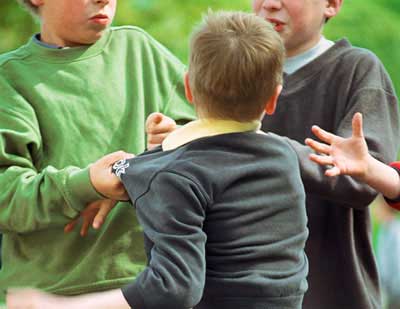
Unfortunately, bullying has been a part of children’s lives probably since the beginning of time. However, what was once thought of as “just a part of childhood” is now seen as a very serious, and sometimes deadly, form of abuse. Adults, as well as peers, need to stand up to bullying, and intervene immediately when it is believed that bullying is occurring. More importantly, let’s find ways to prevent bullying from ever happening in the first place. Here are just a few tips to prevent, and respond, to bullying (including cyberbullying)1. Understand that it is not a “rite of passage” for children to be bullied. It can have very long-term, even deadly, consequences…not just for the target of the bullying, but also for those who are witnessing it.
2. Pay attention to what is going on both at school and at home. If a child starts fearing going to school or to an activity, ask questions.
3. Have clear discipline policies at school or in sports activities, and make it understood that bullying will not be tolerated, and that there will be consequences, including for Cyberbullying.
4. Have a multi-layered approach for bullying prevention. Teachers, support staff, ALL school employees, parents, and children need to be made aware about what to look for in terms of bullying, and how to prevent it
5. Encourage youth to talk to an adult if they are being bullied, or if they know that bullying is occurring to a friend or classmate
6. Supervise children when they are on-line, and tell them to never pass along harmful information about others
7. Tell children to never give out personal information on-line.
8. Start teaching empathy at an early age (even from birth!) so that children will grow understanding how hurtful it is to harm or tease others.
9. Teach interpersonal skills (again, from an early age). Many children who bully lack the skills to make or keep friendships
10. Create opportunities for children to “do good”, especially children you know or suspect may be engaging in bullying behaviors.
Child Passenger Safety Week
Tuesday, September 18, 2012
U.S. DOT and Safe Kids Kick-off Child Passenger Safety Week With New Survey on Common Car Seat Mistakes
WASHINGTON – U.S. Transportation Secretary Ray LaHood today joined National Highway Traffic Safety Administrator David Strickland and Safe Kids President and CEO Kate Carr for the kick-off of Child Passenger Safety Week to remind parents and caregivers to make sure that they are properly using and installing their child safety seats. A new National Highway Traffic Safety Administration (NHTSA) survey shows that parents are making five significant mistakes when using car seats and booster seats. It also found that one in five parents do not read any instructions when installing seats.
“The key to keeping kids safe is to make sure your child is in the right seat for their age and size - and to make sure that the seat is correctly installed in your vehicle,” said Secretary Ray LaHood. “We encourage everyone to take advantage of the many resources available to ensure you’ve done everything to properly protect your child.”
According to a new NHTSA survey, the following are the five most significant and commonly observed mistakes made by parents and caregivers when using and installing car seats and booster seats:
1. Wrong harness slot used - The harness straps used to hold the child in the car seat were positioned either too low or too high;
2. Harness chest clip positioned over the abdomen rather than the chest or not used at all;
3. Loose car seat installation - The restraint system moved more than two inches side-to-side or front to back; anything more than one inch is too much.
4. Loose harness - More than two inches of total slack between the child and the harness strap; there should be no slack.
5. Seat belt placement was wrong – Lap belt resting over the stomach and/or shoulder belt on the child’s neck or face.
The survey also revealed that 20 percent of all drivers of child passengers did not read any instructions on how to properly install their child restraints, yet 90 percent felt ‘confident’ or ‘very confident’ that their car seats and booster seats were installed correctly.
“Child safety seats save hundreds of young lives every year, but proper use is vital,” said Administrator David Strickland. “That’s why we’re urging everyone to make sure their kids are properly protected on every trip, every time.”
“Child safety seats can significantly reduce the risk of death or injury in the event of a crash,” said Kate Carr. “Engineers are working hard to ensure cars and car seats are designed to keep kids as safe as possible. But it’s up to every parent to take full advantage of these innovations by making sure car seats are used and installed correctly. Safe Kids and NHTSA are teaming up to show them how.”
To help parents ensure their child seats are installed and used correctly, Safe Kids and NHTSA are encouraging everyone to take 15 minutes to conduct an at-home checkup using the following Safe Kids downloadable checklist:
• Right Seat. Check the label on your car seat to make sure it’s appropriate for your child’s age, weight and height.
• Right Place. Kids are VIPs, just ask them. We know all VIPs ride in the back seat, so keep all children in the back seat until they are 13. Doing this, along with correctly using the appropriate child restraints, greatly reduces the risk of injury.
• Right Direction. You want to keep your child in a rear-facing car seat for as long as possible. When he or she outgrows the seat, move your child to a forward-facing car seat. Make sure to attach the top tether after you tighten and lock the seat belt or lower anchors.
• Inch Test. Once your car seat is installed, give it a good shake at the base. Can you move it more than an inch side to side or front to back? A properly installed seat will not move more than an inch.
• Pinch Test. Make sure the harness is tightly buckled and coming from the correct slots (check manual). Now, with the chest clip placed at armpit level, pinch the strap at your child’s shoulder. If you are unable to pinch any excess webbing, you’re good to go.
Parents are encouraged to read the vehicle and car seat instruction manuals in addition to following the checklist.
Child Passenger Safety Week began September 16 and culminates September 22 with National Seat Check Saturday. Throughout the week, Safe Kids will host hundreds of child seat inspections across the country as part of its Buckle Up Program, a national initiative established 15 years ago to keep children and families safe in and around cars. Car seat inspections offer drivers the chance to receive assistance and guidance from certified car seat technicians regarding proper installation of their child safety and booster seats.
For more information on Child Passenger Safety Week, visit http://www.nhtsa.gov/Safety/CPS
For more information on Safe Kids Worldwide, visit www.safekids.org
To view NHTSA’s Research Note on the National Child Restraint Use Special Study, click here.
WASHINGTON – U.S. Transportation Secretary Ray LaHood today joined National Highway Traffic Safety Administrator David Strickland and Safe Kids President and CEO Kate Carr for the kick-off of Child Passenger Safety Week to remind parents and caregivers to make sure that they are properly using and installing their child safety seats. A new National Highway Traffic Safety Administration (NHTSA) survey shows that parents are making five significant mistakes when using car seats and booster seats. It also found that one in five parents do not read any instructions when installing seats.
“The key to keeping kids safe is to make sure your child is in the right seat for their age and size - and to make sure that the seat is correctly installed in your vehicle,” said Secretary Ray LaHood. “We encourage everyone to take advantage of the many resources available to ensure you’ve done everything to properly protect your child.”
According to a new NHTSA survey, the following are the five most significant and commonly observed mistakes made by parents and caregivers when using and installing car seats and booster seats:
1. Wrong harness slot used - The harness straps used to hold the child in the car seat were positioned either too low or too high;
2. Harness chest clip positioned over the abdomen rather than the chest or not used at all;
3. Loose car seat installation - The restraint system moved more than two inches side-to-side or front to back; anything more than one inch is too much.
4. Loose harness - More than two inches of total slack between the child and the harness strap; there should be no slack.
5. Seat belt placement was wrong – Lap belt resting over the stomach and/or shoulder belt on the child’s neck or face.
The survey also revealed that 20 percent of all drivers of child passengers did not read any instructions on how to properly install their child restraints, yet 90 percent felt ‘confident’ or ‘very confident’ that their car seats and booster seats were installed correctly.
“Child safety seats save hundreds of young lives every year, but proper use is vital,” said Administrator David Strickland. “That’s why we’re urging everyone to make sure their kids are properly protected on every trip, every time.”
“Child safety seats can significantly reduce the risk of death or injury in the event of a crash,” said Kate Carr. “Engineers are working hard to ensure cars and car seats are designed to keep kids as safe as possible. But it’s up to every parent to take full advantage of these innovations by making sure car seats are used and installed correctly. Safe Kids and NHTSA are teaming up to show them how.”
To help parents ensure their child seats are installed and used correctly, Safe Kids and NHTSA are encouraging everyone to take 15 minutes to conduct an at-home checkup using the following Safe Kids downloadable checklist:
• Right Seat. Check the label on your car seat to make sure it’s appropriate for your child’s age, weight and height.
• Right Place. Kids are VIPs, just ask them. We know all VIPs ride in the back seat, so keep all children in the back seat until they are 13. Doing this, along with correctly using the appropriate child restraints, greatly reduces the risk of injury.
• Right Direction. You want to keep your child in a rear-facing car seat for as long as possible. When he or she outgrows the seat, move your child to a forward-facing car seat. Make sure to attach the top tether after you tighten and lock the seat belt or lower anchors.
• Inch Test. Once your car seat is installed, give it a good shake at the base. Can you move it more than an inch side to side or front to back? A properly installed seat will not move more than an inch.
• Pinch Test. Make sure the harness is tightly buckled and coming from the correct slots (check manual). Now, with the chest clip placed at armpit level, pinch the strap at your child’s shoulder. If you are unable to pinch any excess webbing, you’re good to go.
Parents are encouraged to read the vehicle and car seat instruction manuals in addition to following the checklist.
Child Passenger Safety Week began September 16 and culminates September 22 with National Seat Check Saturday. Throughout the week, Safe Kids will host hundreds of child seat inspections across the country as part of its Buckle Up Program, a national initiative established 15 years ago to keep children and families safe in and around cars. Car seat inspections offer drivers the chance to receive assistance and guidance from certified car seat technicians regarding proper installation of their child safety and booster seats.
For more information on Child Passenger Safety Week, visit http://www.nhtsa.gov/Safety/CPS
For more information on Safe Kids Worldwide, visit www.safekids.org
To view NHTSA’s Research Note on the National Child Restraint Use Special Study, click here.
Using Back Packs Safely
Monday, August 27, 2012
Backpacks are handy for carrying books-and lots of other things. But if they’re not used right, they can strain muscles and even cause back pain.
Backpack safety is important for everyone. It's especially important for children, who can be hurt by regularly carrying too much weight or by not wearing their backpacks safely.
Choose the right backpack
Look for these features:
• Light weight. Leather backpacks may look nice, but other materials, like canvas or nylon, weigh less.
• Wide, padded shoulder straps. A loaded pack will dig into shoulders if the straps are too skinny.
• Waist belt. This is an important feature. It takes some weight off of the back and transfers it to the hips.
• Handy compartments, the more the better. They help distribute the weight evenly. They also make packs easier to organize.
• Padded back. This keeps sharp edges from digging into the back.
• Wheels. These are nice if you or your child needs to carry a lot. But check with your child's school to make sure they’re allowed. Remember that these packs will still have to be carried up stairs. And they can get messy when pulled through mud or snow.
Pack it safely
• Experts say a child shouldn’t carry more than 15% to 20% of his or her weight. Don’t guess-use your bathroom scale to weigh the loaded pack.
• Pack the heaviest items closest to the back. Packs with compartments make this easier to do.
• Talk to your child about using his or her locker to keep from carrying everything around all day.
Lift it safely
• Never bend down from the waist to pick up or set down a heavy pack.
• Always squat down, bending at the knee and keeping your back straight.
• If you need to, you can put one knee on the floor and the other knee in front of you while you lift the pack and swing it around to your back.
Wear it safely
• Pack wearers should use both shoulder straps. It may seem easier or more comfortable to sling the pack over just one shoulder, but that’s a bad habit that can lead to back or shoulder pain.
• Always use the waist belt and tighten all the straps so the pack fits snugly.
• Make sure your child stands up straight while wearing a backpack. If he or she must lean forward, the pack is too heavy.
• If your child is having back pain or neck soreness, talk to your doctor. Encourage your children to tell you about any pain or soreness.
Extra tips for hikers
• Hikers can carry a lot more weight in their packs. But it's still important to follow some safety tips:
• In the weeks before a big hike, use stretching and strengthening exercises to get your muscles in shape, especially your trunk.
• Stand up straight while wearing your pack. It may seem easier to lean forward because you don’t have to use your muscles as much. But it’s bad for your back, because you’re making your spine do all the work.
• Learn several ways to lift a heavy backpack. For example:
• Face the back of your pack, with its shoulder straps facing you. With your knees slightly bent and one leg forward, slide the pack up to your thigh. Put one arm through its shoulder strap and swing the pack onto your back.
• Have a friend hold the pack for you while you insert your arms into the straps.
WebMD Medical Reference from Healthwise
11 Tips for Kindergarten Parents
Monday, August 20, 2012
Becoming involved in your child’s education pays off in many ways. Parent involvement strengthens schools and shows children that you value learning. Research shows that students whose parents are involved in their education are more likely to earn higher grades, score better on standardized tests, and attend college.
What’s more, you’ll benefit directly by taking an active role. You’ll meet other parents and quickly learn the ins and outs of your child’s school. Read on for some ways to become active and make a difference in your child’s education.
1. Start early. Introduce yourself to your child’s teacher. You don’t have to wait until parent-teacher conferences to get to know your kindergartner’s teacher. Sometime during the first week or so of school, find a moment to say a quick hello. Or send a handwritten note or a personal email. Ask the teacher whether there is anything she needs. Find out how the teacher prefers to be contacted. This will set a positive tone for the year.
2. Help out in the classroom. Most kindergarten teachers welcome help from enthusiastic parents. What you do in the classroom will depend on what the teacher needs. It may include preparing materials for lessons and art projects, reading to students, or making copies of worksheets. If you’re unable to commit to a regular schedule, let your child’s teacher know that you still would like to help out with special projects.
3. Become a room parent. Many kindergarten teachers assign one or two parents to plan class parties and other special activities and to coordinate communication between the teacher and the parents. Being a room parent is generally a yearlong assignment, so make sure you can commit to it. It’s a great way to get to know the teacher!
4. Volunteer from home. If you can’t make it into the classroom during the day, let the teacher know you’d like to help out in other ways. You could make phone calls to other parents in the evening, help prepare materials for lessons, and more. Bringing your volunteer ethic home shows your child that school is important. It will also help strengthen your connection with the teacher.
5. Be a special guest. Visit your child’s classroom to share something special about yourself, such as your occupation, your cultural background, or an interesting hobby. Your child will be proud to let everyone know you’re her parent!
6. Learn about your child’s school. Read the school handbook to learn about school policies. Stay informed by reading school and parent-teacher group newsletters. If the school has a website, check it regularly for updates and information.
7. Reach out to other parents. Look for opportunities to get to know the parents of your child’s classmates. Volunteer to chaperone field trips. Attend class parties and assemblies. Don’t be shy about introducing yourself, and be sure to exchange phone numbers and email addresses. The other parents will be an invaluable support system during the first year of school and beyond.
8. Attend school events. Make it a point to go to assemblies, open houses, art shows, and other schoolwide events, even ones your child isn’t directly involved with. School events are a great place to meet staff members and other parents, and going together will help your child feel more at home in his new school.
9. Talk with your child about school. When your child comes home from school, ask specific questions to draw her out. Instead of saying “How was your day?” ask “What was the best thing that happened today at school?” and “Tell me one new thing that you learned today in kindergarten.”
10. Show him that school matters. Praise your child’s efforts. Show him how wonderful his schoolwork is by posting artwork and school papers on the refrigerator for everyone to see. Communicate the idea, in both words and actions, that school is important.
11. Join the PTO or PTA. Your school parent group is a terrific way to learn about your child’s school. You’ll forge lasting connections with the parents you meet, and you’ll have a role in making your child’s school a fun and exciting place to learn.
See more information at http://www.schoolfamily.com/
Attachment Parenting for Young Ones
Monday, August 6, 2012
Attachment Parenting is a style of parenting that many parents and professionals believe is best for both caregiver and baby. It stresses the importance of touch, nurturing, seeing to a baby’s cries and other positive discipline options like distracting, redirecting and guiding a child.
Attachment Parenting’s main theory is that when children’s needs are met in a positive and consistent manner by a caregiver early in life, they learn to trust and thrive…and grow!
Many believe the earlier in a child’s life this attachment begins, the better. Of course an infant relies on a caregiver for almost all of their needs. Brain development, and therefore all growth and development, rely on such supportive, nurturing behaviors.
Beware of placing infants on a prescribed “feeding schedule,” rather feed them when they are hungry. Beware too of the old wives tale that babies can be spoiled if they’re picked-up “too often”. If children don’t have this trust and bonding early, they may not learn to form healthy attachments later in life. They may suffer from insecurity, lack of empathy, and in extreme cases, anger and attachment disorders.
This is a general overview of the main ideas of Attachment Parenting. Lately there have been concerns which need to be considered, like:
Babies should not sleep in an adult bed…it is far too dangerous. Rollovers or suffocations are a major concern. Babies can have a bassinet or crib close.
The bottom line is that all types of secure attachment are vital for physical, emotional, moral, and social development of children.
Carol Cochard Pool, PCAIN Prevention Education Specialist
Attachment Parenting’s main theory is that when children’s needs are met in a positive and consistent manner by a caregiver early in life, they learn to trust and thrive…and grow!
Many believe the earlier in a child’s life this attachment begins, the better. Of course an infant relies on a caregiver for almost all of their needs. Brain development, and therefore all growth and development, rely on such supportive, nurturing behaviors.
Beware of placing infants on a prescribed “feeding schedule,” rather feed them when they are hungry. Beware too of the old wives tale that babies can be spoiled if they’re picked-up “too often”. If children don’t have this trust and bonding early, they may not learn to form healthy attachments later in life. They may suffer from insecurity, lack of empathy, and in extreme cases, anger and attachment disorders.
This is a general overview of the main ideas of Attachment Parenting. Lately there have been concerns which need to be considered, like:
Babies should not sleep in an adult bed…it is far too dangerous. Rollovers or suffocations are a major concern. Babies can have a bassinet or crib close.
The bottom line is that all types of secure attachment are vital for physical, emotional, moral, and social development of children.
Carol Cochard Pool, PCAIN Prevention Education Specialist
The Importance of Childhood Immunizations
Monday, July 30, 2012
Disease Prevention--Protect Those Around You
Disease prevention is the key to public health. It is always better to prevent a disease than to treat it. Vaccines prevent disease in the people who receive them and protect those who come into contact with unvaccinated individuals. Vaccines help prevent infectious diseases and save lives. Vaccines are responsible for the control of many infectious diseases that were once common in this country, including polio, measles, diphtheria, whooping cough, rubella (German measles), mumps, and tetanus.
Parents are constantly concerned about the health and safety of their children and take many steps to protect them. These steps range from child-proof door latches to child safety seats. In the same way, vaccines work to protect infants, children, and adults from illnesses and death caused by infectious diseases. While the U.S. currently has record, or near record, low cases of vaccine-preventable diseases, the viruses and bacteria that cause them still exist. Even diseases that have been eliminated in this country, such as polio, are only a plane ride away. Polio, and other infectious diseases, can be passed on to people who are not protected by vaccines.
Vaccine-preventable diseases have a costly impact, resulting in doctor's visits, hospitalizations, and premature deaths. Sick children can also cause parents to lose time from work.
Why are Childhood Vaccines So Important?
• It's true that newborn babies are immune to many diseases because they have antibodies they got from their mothers. However, the duration of this immunity may last only a month to about a year. Further, young children do not have maternal immunity against some vaccine-preventable diseases, such as whooping cough.
• If a child is not vaccinated and is exposed to a disease, the child's body may not be strong enough to fight it. Before vaccines, many children died from diseases that vaccines now prevent, but these same germs still exist. Babies are now protected by vaccines, however, so we do not see these diseases as often.
• Immunizing individual children also helps to protect the health of our community, especially those people who are not immunized. People who are not immunized include those who are too young to be vaccinated (e.g., children less than a year old cannot receive the measles vaccine but can be infected by the measles virus), those who cannot be vaccinated for medical reasons (e.g., children with leukemia), and those who cannot make an adequate response to vaccination. Immunization also slows down or stops disease outbreaks.
Why Immunize? For Parents
Why immunize our children? Sometimes we are confused by the messages in the media. First we are assured that, thanks to vaccines, some diseases are almost gone from the U.S. But we are also warned to immunize our children.
It's true that some diseases are becoming very rare in the U.S. Of course, they are becoming rare largely because we have been vaccinating against them. Keep immunizing until disease is eliminated.
Unless we can eliminate the disease, it is important to keep immunizing. Even if there are only a few cases of disease today, if we take away the protection given by vaccination more and more people will be infected and will spread diseases to others. Soon we will undo the progress we have made over the years.
We vaccinate to protect our future.
We don't vaccinate just to protect our children. We also vaccinate to protect our grandchildren and their grandchildren. Our children don't have to get smallpox shots anymore because the disease no longer exists. If we keep vaccinating now, parents in the future may be able to trust that diseases like polio and meningitis won't infect, cripple, or kill children. Vaccinations are one of the best ways to put an end to the serious effects of certain diseases.
Source: www.cdc.gov (Centers for Disease Control and Prevention). Reprinted with permission
Subscribe to:
Posts (Atom)